Introduction
A wardrobe is no longer just a place to store clothes. In modern residential design, it has become an integral part of the interior architecture, combining storage efficiency, aesthetics, and functionality. Whether it is a luxury villa, a city apartment, a townhouse, or a hospitality project, a well-designed wardrobe contributes significantly to the comfort and organization of everyday living.
Unlike ready-made furniture, custom wardrobes are designed specifically for the dimensions and lifestyle requirements of each project. They maximize every available centimeter of space, accommodate different storage needs, and integrate seamlessly with the overall interior design.
For architects, interior designers, contractors, and property developers, selecting the right custom wardrobe manufacturer is about much more than purchasing cabinetry. It means partnering with a supplier capable of delivering engineering support, material recommendations, precision manufacturing, quality control, export logistics, and installation assistance throughout the project.
Manufacturers such as BoyceCasa provide integrated wardrobe solutions alongside kitchen cabinets, interior doors, wall panels, bathroom vanities, and other customized furniture systems, helping residential projects maintain consistent quality while simplifying procurement.
Why Custom Wardrobes Are Becoming the Preferred Choice
As living standards improve, homeowners expect furniture to be tailored to their homes rather than adapting their homes to standard furniture dimensions. This shift has made custom wardrobes one of the fastest-growing categories in residential interiors.
Unlike standard wardrobes that are manufactured in fixed dimensions, custom wardrobes are designed around the available space, architectural features, and personal storage habits.
The result is better organization, improved aesthetics, and significantly higher space utilization.
Maximize Every Inch of Space
Every home has unique architectural conditions.
Some bedrooms have sloped ceilings.
Others include structural columns, recessed walls, irregular corners, or limited floor areas.
Standard wardrobes often leave unused gaps that collect dust and reduce storage efficiency.
A custom wardrobe is built specifically around these structural conditions.
Instead of leaving empty spaces above the wardrobe, manufacturers can produce floor-to-ceiling cabinets that provide additional storage for seasonal clothing, luggage, or household items.
Likewise, corner wardrobes transform difficult spaces into functional storage instead of wasted areas.
This customized approach is especially valuable in apartments where every square meter matters.
Better Organization Improves Daily Living
An attractive wardrobe is important, but organization determines whether it remains practical over time.
Instead of simply increasing cabinet volume, professional wardrobe design focuses on creating dedicated storage for different categories of belongings.
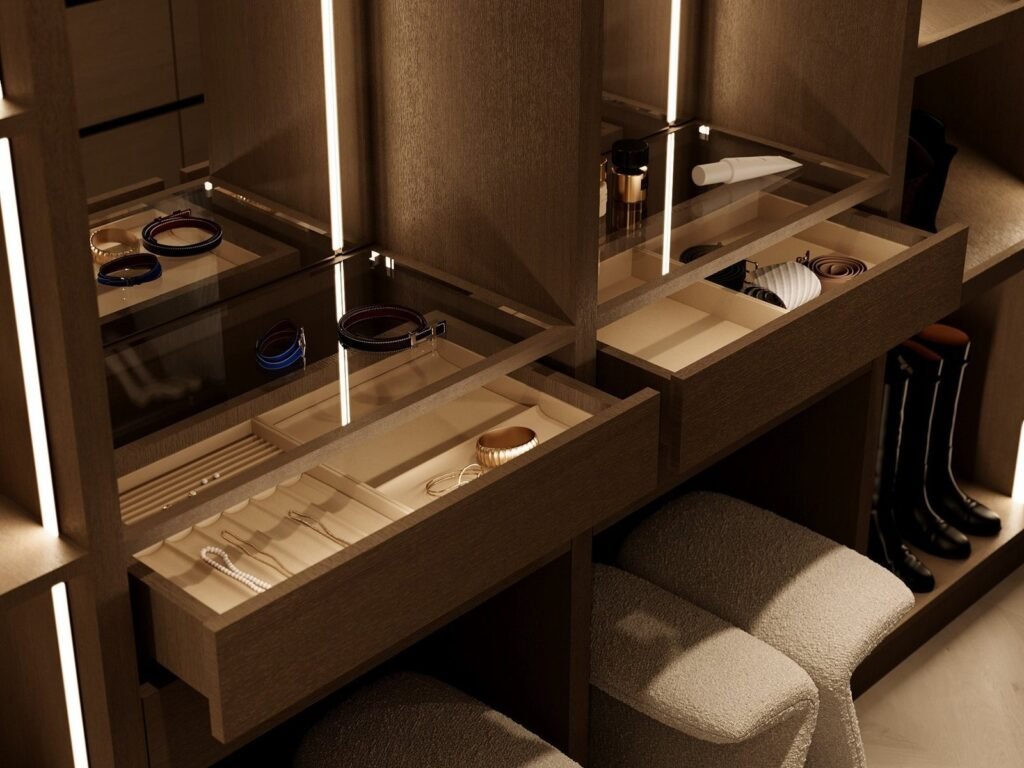
Common storage solutions include:
- Double hanging rails
- Adjustable shelves
- Pull-out drawers
- Jewelry organizers
- Tie and belt racks
- Trouser pull-outs
- Shoe storage systems
- Hidden laundry compartments
- Overhead storage
- Open display shelves
These internal accessories improve accessibility while reducing clutter and making daily routines more efficient.
Different Types of Custom Wardrobes
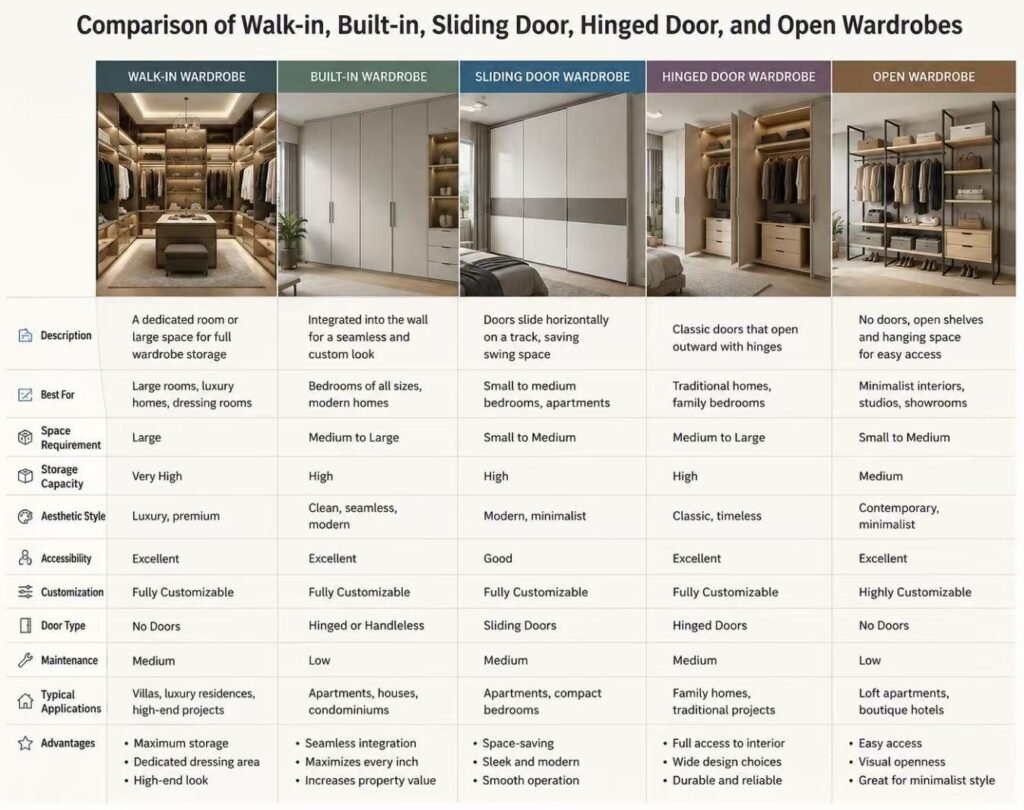
Not every project requires the same wardrobe configuration.
The ideal solution depends on available space, room layout, storage requirements, and interior style.
Understanding the most common wardrobe types helps designers choose the most suitable option for each project.
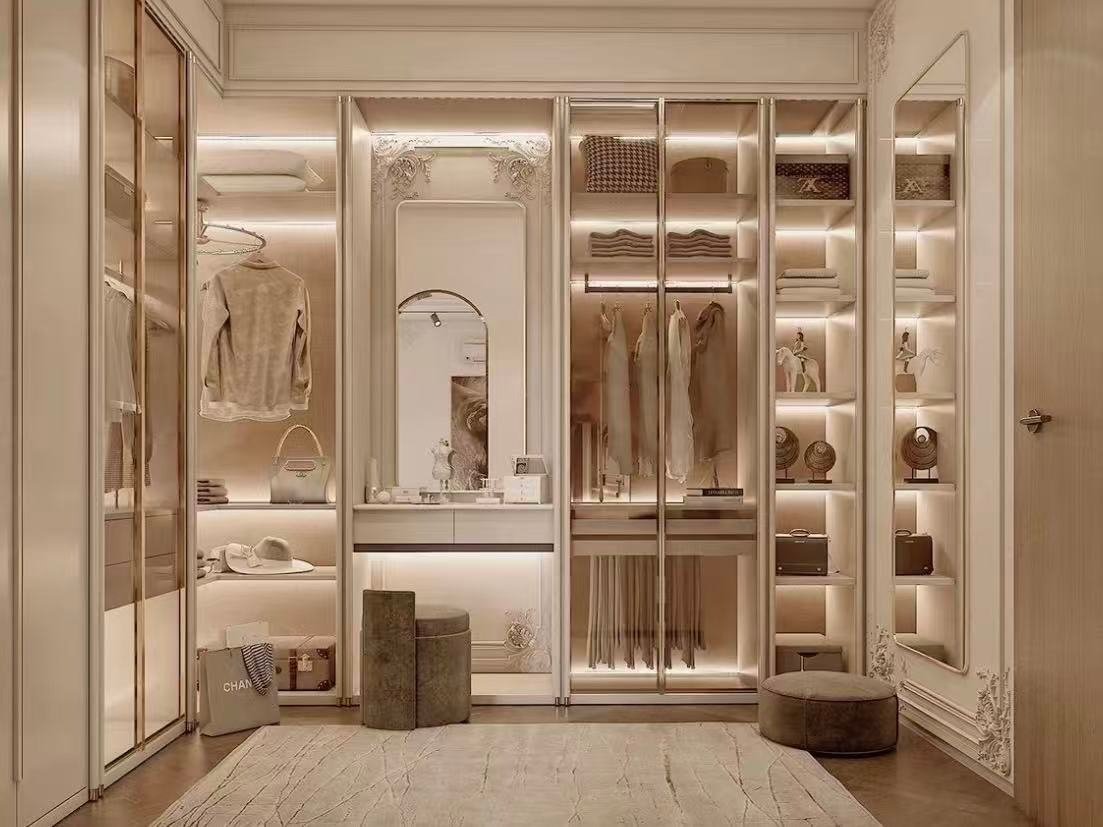
Walk-in Wardrobes
Walk-in wardrobes provide the highest level of storage flexibility.
Instead of functioning as a single cabinet, they create an independent dressing space where clothing, shoes, bags, accessories, and personal belongings are organized into dedicated zones.
Typical features include:
- Floor-to-ceiling storage
- Open shelving
- Glass display cabinets
- Island storage units
- Integrated LED lighting
- Full-length mirrors
Walk-in wardrobes are commonly found in luxury villas, master bedrooms, and premium residences where space allows for a dedicated dressing area.
Built-in Wardrobes
Built-in wardrobes are permanently integrated into the architecture of the room.
Because they follow the exact dimensions of the wall, they maximize storage while creating a clean, seamless appearance.
Advantages include:
- No wasted gaps
- Higher storage capacity
- Better visual consistency
- Easier cleaning
- Improved property value
Built-in wardrobes remain one of the most popular choices for apartments and modern residential projects.
Sliding Door Wardrobes
Sliding door wardrobes are ideal for compact bedrooms where swing doors may interfere with circulation.
Rather than opening outward, the doors slide horizontally along tracks, allowing furniture to be positioned closer to the wardrobe.
Benefits include:
- Space-saving operation
- Modern appearance
- Large door panels
- Suitable for compact bedrooms
- Smooth access
Sliding systems are particularly common in urban apartments and contemporary interiors.
Hinged Door Wardrobes
Hinged wardrobes continue to be one of the most versatile wardrobe styles.
Because every door opens independently, users have complete access to the wardrobe interior.
They also allow more flexibility for installing internal accessories behind each door.
Typical applications include:
- Family homes
- Children’s bedrooms
- Guest rooms
- Traditional interiors
Modern soft-close hinges significantly improve durability while reducing operational noise.
Open Wardrobes
Open wardrobes have become increasingly popular in minimalist interiors.
Instead of hiding clothing behind doors, they display garments and accessories as part of the room’s design.
This style is frequently used in:
- Studio apartments
- Contemporary bedrooms
- Boutique hotels
- Luxury dressing rooms
Although they require better organization, open wardrobes create a lighter visual appearance and improve accessibility.
Choosing the Right Materials
Material selection directly influences durability, maintenance requirements, appearance, and manufacturing cost.
Professional manufacturers evaluate several factors before recommending suitable materials.
These include climate, humidity, project budget, expected service life, and interior design style.
Cabinet Box Materials
The cabinet structure forms the foundation of every wardrobe.
Common options include:
- Plywood
- MDF
- Particle board
Each material offers different advantages in terms of strength, moisture resistance, machining performance, and cost.
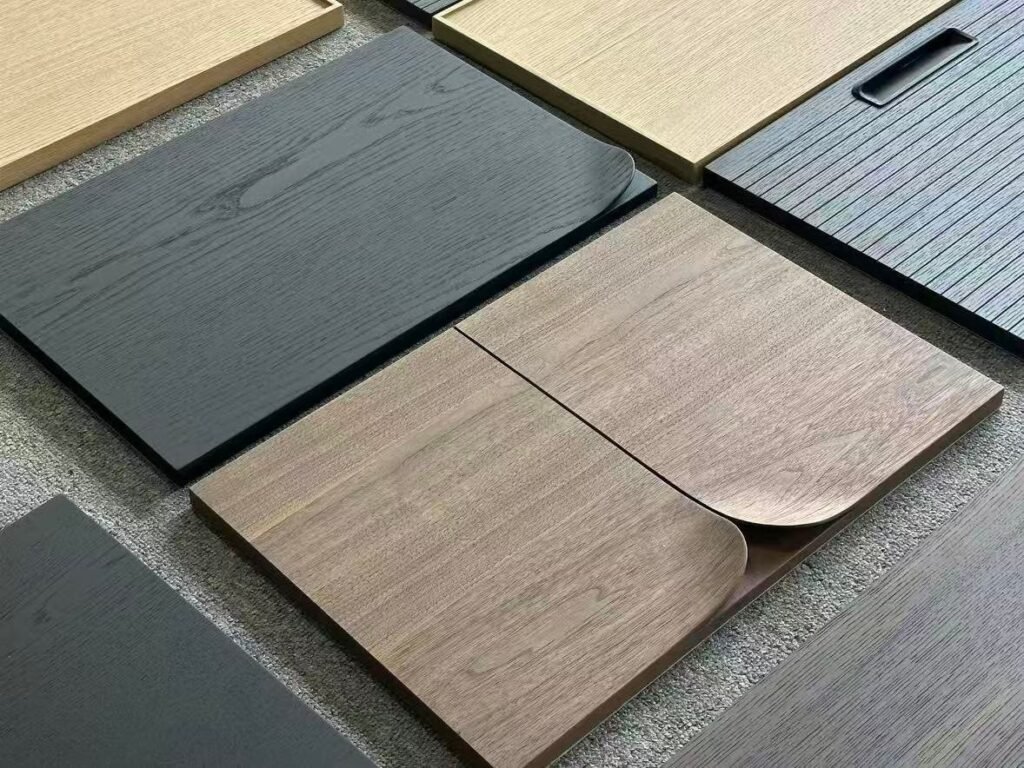
Door Panel Finishes
The visible appearance of the wardrobe is largely determined by the door finish.
Popular options include:
- Melamine
- PET finish
- Acrylic
- Natural wood veneer
- Lacquer
- Glass
- Aluminum frame glass doors
The choice depends on the desired design style, maintenance expectations, and budget.
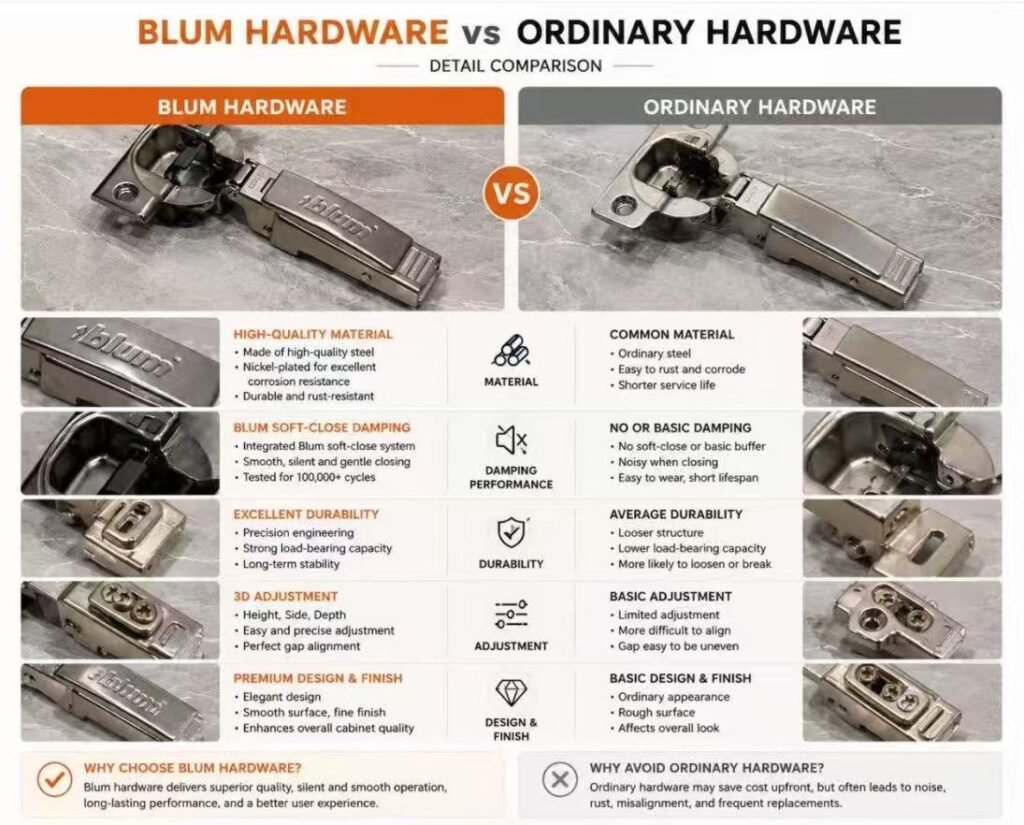
Hardware Systems
High-quality hardware improves both durability and user experience.
Common wardrobe accessories include:
- Soft-close hinges
- Concealed drawer slides
- Pull-out baskets
- Adjustable hanging rails
- LED lighting systems
- Lift-up clothing rails
Although hardware represents only a small percentage of the project budget, it has a significant impact on long-term performance.
Custom vs. Modular Wardrobes: Which One Is the Better Investment?
One of the most common questions homeowners ask is whether they should choose a modular wardrobe or invest in a fully customized solution. While modular wardrobes are widely available and often cost less initially, they are designed around standardized dimensions rather than the actual room.
Custom wardrobes, on the other hand, are built according to the exact measurements of the space, allowing designers to maximize storage while maintaining a clean and integrated appearance.
| Feature | Modular Wardrobe | Custom Wardrobe |
| Dimensions | Standard sizes | Made to measure |
| Space Utilization | Moderate | Maximum |
| Design Flexibility | Limited | Fully customizable |
| Material Options | Limited | Wide selection |
| Internal Storage | Standard | Personalized |
| Architectural Integration | Partial | Seamless |
| Suitable Projects | Apartments, rentals | Villas, apartments, luxury homes, hotels |
| Long-Term Value | Moderate | High |
Although modular wardrobes may suit temporary residences or budget renovations, custom wardrobes provide greater flexibility, better aesthetics, and improved long-term usability, making them a preferred solution for modern residential developments.
Inside the Manufacturing Process
Behind every high-quality wardrobe is a carefully controlled manufacturing process. A professional manufacturer does far more than assemble cabinet panels—it transforms design concepts into precision-engineered furniture that fits perfectly within the finished interior.
A typical production workflow includes:
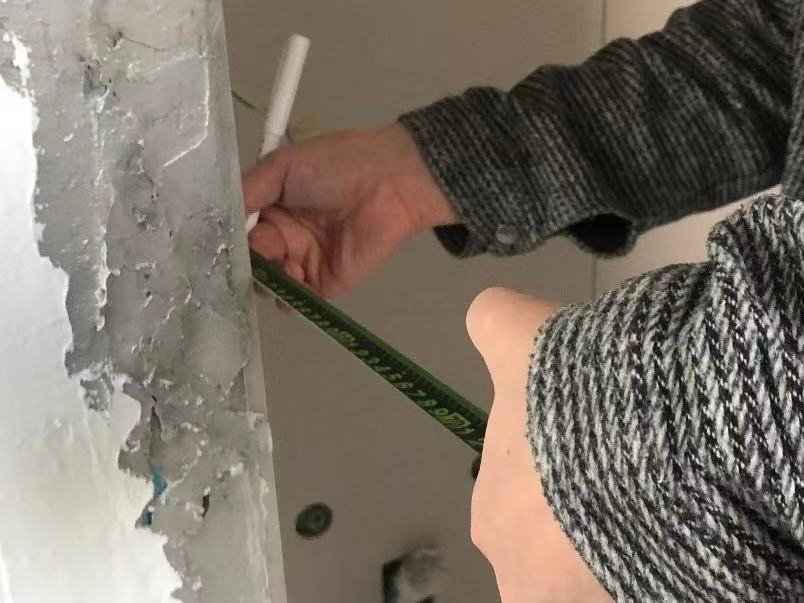
- Project consultation and requirement analysis
- Space measurement or drawing review
- Interior layout and storage planning
- Material and hardware selection
- Engineering drawings
- CNC cutting and drilling
- Edge banding and surface finishing
- Assembly and quality inspection
- Protective packaging
- Export logistics and shipping
- Installation guidance and after-sales support
Modern factories use CNC machining centers, automated edge-banding equipment, and strict quality control procedures to ensure every panel, door, and accessory meets production specifications.
This standardized workflow minimizes installation errors and ensures consistency across projects of any scale.
How to Choose the Right Custom Wardrobe Manufacturer
Selecting a wardrobe manufacturer is not simply about comparing prices. A reliable partner contributes to the success of the entire project through engineering expertise, production quality, and project coordination.
Before making a decision, evaluate the following areas.
Manufacturing Capacity
Can the factory handle projects of different sizes while maintaining consistent quality?
Manufacturers with advanced production lines and standardized workflows are generally better equipped to deliver reliable results across villas, apartments, and multi-unit developments.
Engineering Support
Professional engineering is essential for customized furniture.
Ask whether the manufacturer provides:
- Shop drawings
- Installation drawings
- Hardware layouts
- Production numbering
- Technical support
Accurate engineering minimizes installation problems and reduces costly modifications on site.
Material Selection
A professional manufacturer should offer multiple options for:
- Cabinet boards
- Door finishes
- Glass systems
- Hardware brands
- Interior accessories
- Lighting solutions
Rather than recommending a single solution for every project, experienced suppliers tailor material selections according to climate, design preferences, usage requirements, and budget.
Quality Control
Quality should be monitored throughout production, not only after assembly.
A comprehensive inspection process typically includes:
- Dimensional accuracy
- Surface finish quality
- Door alignment
- Drawer operation
- Hardware installation
- Packaging inspection
Reliable quality control ensures that every wardrobe arrives ready for installation.
Export Experience
For international projects, export capability is just as important as manufacturing quality.
An experienced supplier should understand:
- Export-grade packaging
- Container loading
- Product labeling
- Customs documentation
- Overseas logistics
This reduces the risk of transportation damage and helps projects stay on schedule.
See also: Why Local Homeowners Trust a Plumber in Mesa Az for Quick Repairs
Communication and Project Coordination
Clear communication is often overlooked, yet it is one of the most important aspects of a successful project.
Designers, builders, procurement teams, and installers all rely on accurate production information. Working with an experienced custom wardrobe manufacturer allows these teams to coordinate design, engineering, manufacturing, and logistics more efficiently from concept to completion.
Common Mistakes When Buying Custom Wardrobes
Many wardrobe problems are not caused by manufacturing defects—they result from decisions made during the planning stage.
Understanding these common mistakes helps avoid unnecessary costs and installation issues.
Prioritizing Price Over Quality
The lowest quotation may appear attractive, but poor materials and inconsistent workmanship often increase maintenance costs over time.
Ignoring Internal Storage Planning
A wardrobe with beautiful doors but poor internal organization quickly becomes inconvenient.
Storage accessories should be planned according to the user’s lifestyle rather than added as an afterthought.
Choosing Materials Based Only on Appearance
Different environments require different materials.
For example, humid coastal regions benefit from moisture-resistant boards and corrosion-resistant hardware, while dry climates may prioritize natural wood finishes.
Delaying Wardrobe Design
Wardrobes should be planned early in the project.
Early planning allows electrical outlets, lighting, air-conditioning systems, and architectural details to be coordinated before production begins.
Overlooking Installation Requirements
Even perfectly manufactured wardrobes require proper installation.
Professional installation drawings and technical support significantly improve installation efficiency while reducing on-site adjustments.
Where Are Custom Wardrobes Commonly Used?
Because every building has different storage requirements, custom wardrobes are suitable for a wide variety of projects.
| Project Type | Typical Requirements |
| Luxury Villas | Walk-in wardrobes, premium finishes, large storage capacity |
| Apartments | Space-saving designs and floor-to-ceiling storage |
| Townhouses | Flexible layouts and multifunctional storage |
| Holiday Homes | Durable, easy-to-maintain materials |
| Boutique Hotels | Consistent quality across multiple rooms |
| Residential Developments | Standardized production with customized layouts |
The ability to adapt wardrobe dimensions, finishes, and storage systems makes custom manufacturing an ideal solution for both individual homes and large-scale residential developments.
Frequently Asked Questions
Are custom wardrobes worth the investment?
Yes. Custom wardrobes maximize available space, improve organization, and are designed to match the specific dimensions and style of the room.
How long does production usually take?
Lead time depends on project size, material selection, and manufacturing complexity. Detailed engineering and planning are completed before production begins.
Which wardrobe material is the most durable?
There is no single best material. The appropriate choice depends on environmental conditions, maintenance expectations, design preferences, and budget.
Are sliding wardrobes better than hinged wardrobes?
Sliding wardrobes save space and are ideal for compact rooms, while hinged wardrobes provide full access to the interior and greater flexibility for internal accessories.
Can wardrobes be customized for irregular rooms?
Yes. One of the main advantages of custom manufacturing is the ability to accommodate sloped ceilings, recessed walls, structural columns, and other architectural features.
What hardware is commonly used?
Professional manufacturers typically offer premium soft-close hinges, concealed drawer slides, pull-out storage systems, and integrated LED lighting.
Can wardrobes be shipped internationally?
Yes. Many manufacturers provide export packaging, logistics coordination, and installation guidance for overseas residential projects.
What information is needed for a quotation?
Providing floor plans, elevations, room dimensions, preferred finishes, and project timelines allows manufacturers to prepare more accurate quotations and technical recommendations.
Conclusion
A wardrobe should do more than store clothing—it should enhance the functionality, organization, and overall quality of the living space.
Choosing the right manufacturer is therefore an important decision that extends beyond furniture production. From design consultation and engineering to precision manufacturing, quality control, and international delivery, every stage contributes to the final performance of the product.
Whether the project is a luxury villa, an urban apartment, a boutique hotel, or a multi-unit residential development, partnering with an experienced wardrobe manufacturer ensures that every storage solution is tailored to the architecture, the lifestyle of the user, and the long-term requirements of the project.
For professionals seeking customized wardrobe systems together with kitchens, interior doors, wall panels, and other built-in furniture, working with a trusted manufacturing partner provides a more efficient procurement process while maintaining consistent quality across the entire interior package.